




Open data for defense of the territory: an experience from the Bolivian Amazon
Publié par Dr. Patricia Llanos Torrico, Juan Arellano Valdivia • 5 novembre 2025
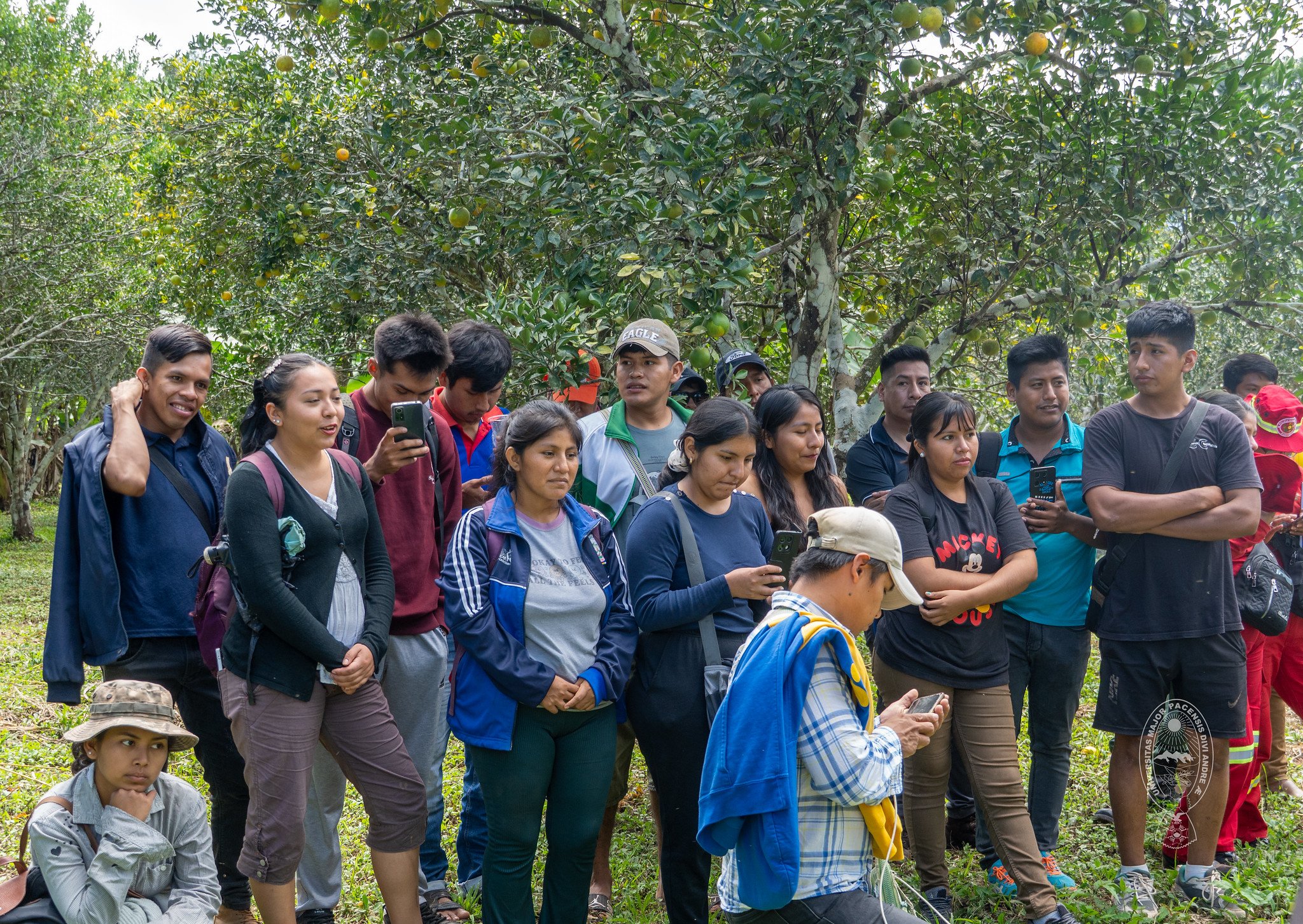
Meet Adalid and Yoel, youth from the bolivian amazon who have learned how to use drones and mapping platforms; and are using these technologies to map their community. They, along with their friends and neighbors, want to share how these tools have enhanced their capacity to register and protect their territory, weaving together communitary knowledge with technological innovation, and they are happy to tell the world about it.
Adalid and Yoel are part of the "Collaborative Mapping for the Rescue of Ancestral Knowledge" project, implemented with the Tacana and Mosetenes communities of the northern Amazon region of La Paz, Bolivia, and led by Dr. Patricia Llanos Torrico of the Mayor University of San Andrés (UMSA). Through field trips and training in free digital tools such as OpenStreetMap, Street Complete, Mapillary, and Tasking Manager, as well as the use of drones for image generation, the foundations have been laid for the sustainability and replicability of this initiative in other Amazonian regions of Bolivia.

The project, with its intercultural approach, has worked closely with local authorities, community leaders, and university students to ensure community ownership of the technology. These authorities have actively participated in the planning and execution of activities, ensuring that the mapping processes reflect the communities' priorities and needs. Building trust based on respect for ancestral knowledge has been a key element in the development of the process.
The collaborative mapping workshops were aimed at both community members and students from UMSA. This training in geospatial tools enabled the accurate documentation of key elements of the territory, such as natural resources, cultural sites, and areas of traditional use. Field trips facilitated the collection of geographic data and hands-on learning, strengthening the bond between the stakeholders and enriching the project by incorporating complementary academic perspectives into community knowledge.

One of the project's most significant milestones was a project in HOT's Tasking Manager, which successfully mapped a small but important portion of the Amazonian territory in northern La Paz. This achievement demonstrates the potential of collaborative mapping as a tool for territorial management and cultural preservation.
In the following months, the project will focus on:
- Expand training to other communities in the Amazon region, including those in the Beni department.
- Develop a digital repository of the generated maps, accessible to communities and other stakeholders.
- Establish a training program for local trainers to ensure the sustainability of the acquired skills.
- Seek partnerships with national and international organizations to finance the expansion of the project and the incorporation of advanced technologies, such as drones and geographic information systems (GIS).
It is also important to note that a presentation of the progress and methodology of this project was made to the Latin American OpenStreetMap community on September 6th during the State of the Map Latam 2025 event in the city of Medellin, Colombia.
This work is supported by a grant from the Inter-American Institute for Global Change Research (IAI) Seed Fund, Tropical Forests in the Americas: Transdisciplinary Approaches to Environmental Transformations, SG-TF-2024.
It also benefits from the technological support of the Humanitarian OpenStreetMap Team, strategic partnerships with local stakeholders such as the Indigenous Council of the Tacana People (CIPTA), Indigenous authorities, students and associate professors from the Major University of San Andrés (UMSA), and the participation of neighboring academic institutions, such as the Universidad Autónoma del Beni.
Share